Medusa
Caravaggio · 1590
The story
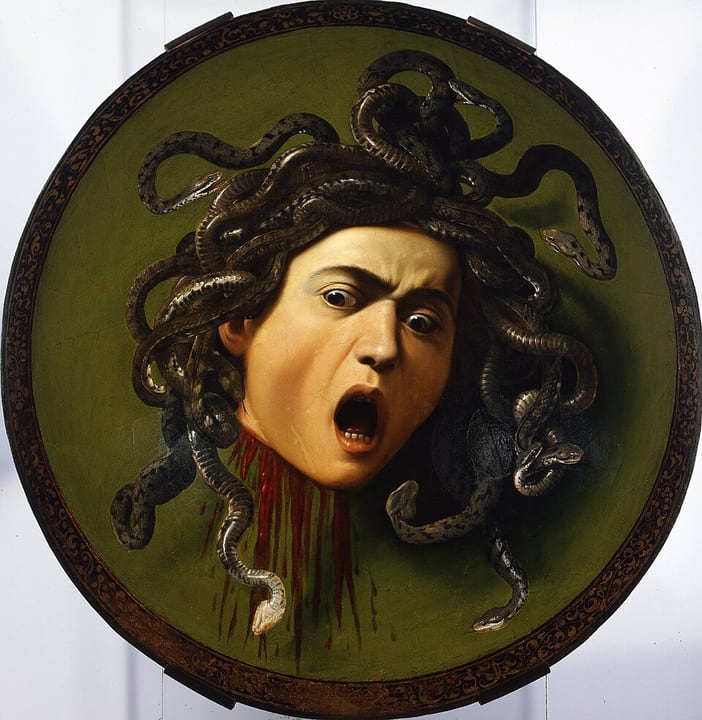
Two versions of Medusa were created by the Italian Baroque painter Michelangelo Merisi da Caravaggio, one in 1596 and the other in ca. 1597. Both depict the moment from Greek mythology in which the Gorgon Medusa is killed by the demigod Perseus, but the Medusas are also self-portraits. Due to its bizarre and intricate design, the painting is said to display Caravaggio's unique fascination with violence and realism. The Medusa was commissioned by the Italian diplomat Francesco Maria del Monte, who planned to gift the commemorative shield to Ferdinando I de' Medici and have it placed in the Medici collection. It is now located in the Uffizi Museum in Florence without signature.
- Artist
- Caravaggio
- Date
- 1590
- Collection
- Uffizi Gallery, Florence, Italy
- Medium
- oil paint, canvas
- Size
- 60 × 55 cm
Story adapted from the Wikipedia article and its contributors, licensed under CC BY-SA 4.0. Facts from Wikidata (CC0). Image: Public domain, Wikimedia Commons.

Explore paintings by Caravaggio
Explore related paintings
- Amor Vincit Omnia (Caravaggio) by Caravaggio
- Supper at Emmaus by Caravaggio
- The Beheading of Saint John the Baptist by Caravaggio
- The Calling of Saint Matthew by Caravaggio
- Young Sick Bacchus by Caravaggio
- Adoration of the Magi by Sandro Botticelli
Guess famous paintings in the free daily art puzzle →
Enable JavaScript to play the interactive puzzle. Your progress stays on this device.