Vienna Diptych
Hugo van der Goes · 1470
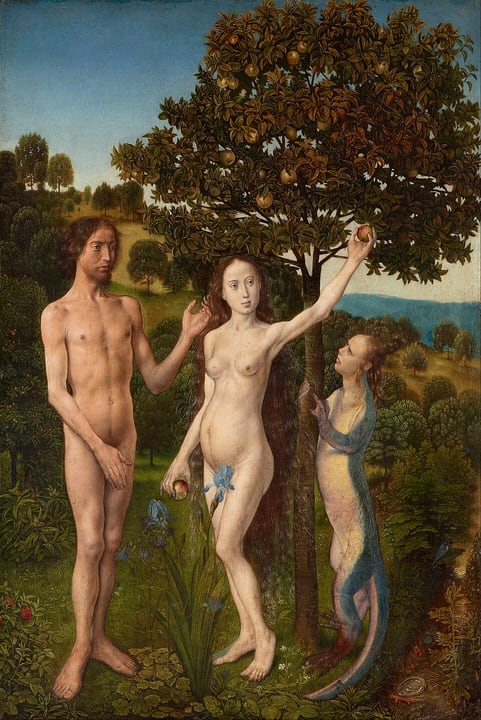
The story
The Vienna Diptych or the Fall and Redemption of Man is a religious diptych by the Flemish artist Hugo van der Goes depicting the fall of man on the left panel and the lamentation of Christ on the right panel. Painted in the second half of the 15th century, the diptych is housed in the Kunsthistorisches Museum, Vienna. According to Wolfgang Kermer, who also described the work in detail in its condition in 1967, the diptych is unique in the history of diptych painting in terms of its subject matter (antithesis: Fall of Man / Redemption).
The tempting Serpent is depicted as a bipedal salamander-like creature because it was assumed that the serpent could walk before God's curse compelled it to crawl and eat dust. The human-headed Serpent was introduced into art in the late 13th century. Subsequent Renaissance artists generally abandoned the depiction of Serpent as a human-headed creature.
The reverse side of the left panel has an image of Saint Genevieve painted on it. The reverse side of the right panel bears traces of a coat of arms, consisting of a shield with a black eagle and two supporters, of which only the feet survived. The coat of arms was painted in the 17th century and indicates possible House of Habsburg ownership of the diptych.
- Artist
- Hugo van der Goes
- Date
- 1470
- Collection
- Kunsthistorisches Museum, Vienna, Austria
- Medium
- oil paint, panel
- Size
- 41 × 61.5 cm
Story adapted from the Wikipedia article and its contributors, licensed under CC BY-SA 4.0. Facts from Wikidata (CC0). Image: Public domain, Wikimedia Commons.

Explore paintings by Hugo van der Goes
Explore related paintings
- Death of the Virgin (van der Goes) by Hugo van der Goes
- Monforte Altarpiece by Hugo van der Goes
- Adoration of the Trinity by Albrecht Dürer
- Laura (Giorgione) by Giorgione
- Martyrdom of the Ten Thousand by Albrecht Dürer
- Medusa (Rubens) by Peter Paul Rubens
Guess famous paintings in the free daily art puzzle →
Enable JavaScript to play the interactive puzzle. Your progress stays on this device.